

A pet grooming course prepares students by teaching them to identify various breeds and coat types to tailor care appropriately. It develops hands-on skills in bathing, brushing, and trimming, ensuring pets remain comfortable and safe pet grooming academy. Students learn to manage anxious animals with calm techniques and positive reinforcement. The course also emphasizes clear communication with pet owners and essential business skills like time management and professionalism. Exploring these areas further reveals how students gain confidence for real client interactions.

Understanding Different Breeds and Coat Types
Understanding different breeds and coat types is essential for effective pet grooming. Each breed’s unique characteristics influence grooming needs cosmos pet universe, from coat texture to growth patterns. Recognizing these differences empowers groomers to tailor their approach, ensuring comfort and ideal results for the animal.
For instance, double-coated breeds require different care than single-coated ones, and curly or wiry fur demands specialized handling. This knowledge fosters confidence and adaptability, allowing groomers to work freely without rigid methods.
Mastering Essential Grooming Techniques
Although knowledge of breeds and coat types lays the groundwork, mastering essential grooming techniques is crucial for professional results.
A pet grooming course equips students with hands-on skills such as bathing, drying, brushing, clipping, and trimming. These fundamental practices guarantee pets look their best while maintaining coat health and comfort.
Precision in using grooming tools prevents injury and promotes efficiency, allowing groomers to work confidently and independently.
Students learn to adapt techniques to suit each animal’s unique coat texture and length, fostering versatility.
Mastery of these skills empowers future groomers to deliver consistent, high-quality service, opening the door to client trust and repeat business.
This foundation supports a career marked by skillful freedom and professional pride.
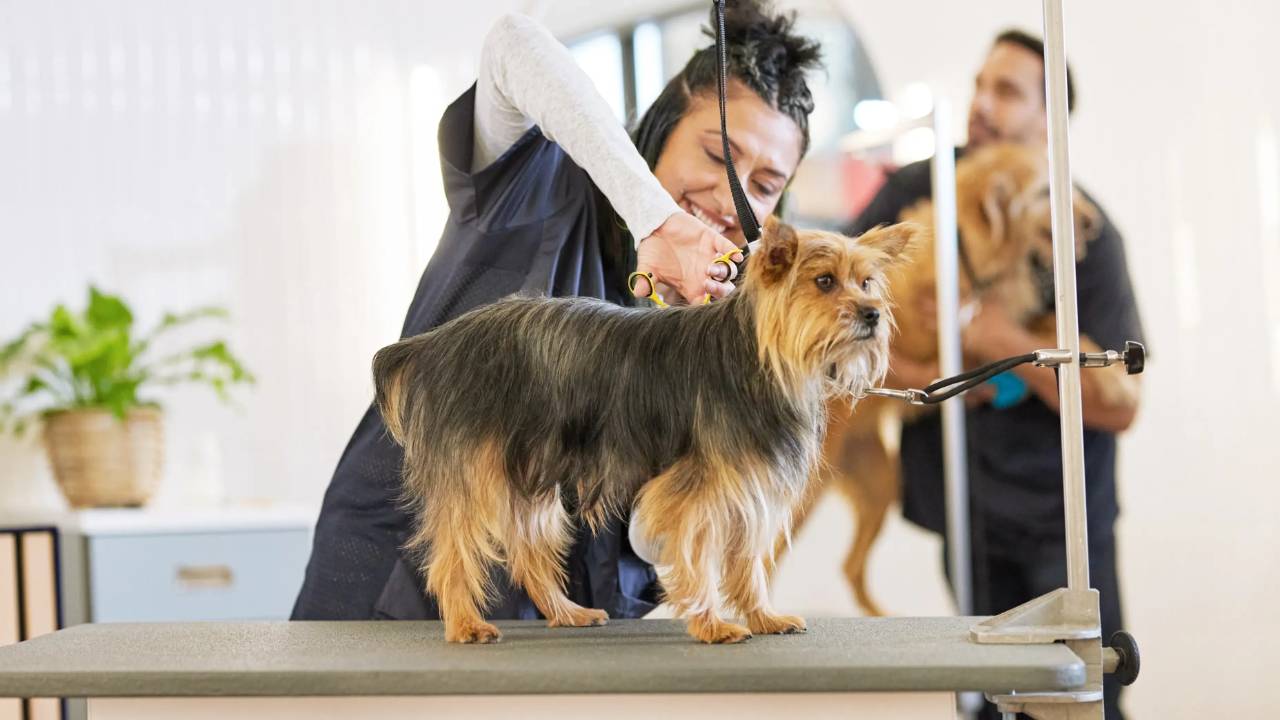
Handling Anxious or Difficult Pets
How can groomers effectively manage pets that display anxiety or challenging behavior during grooming sessions? A pet grooming course equips students with techniques to recognize stress signals and adapt their approach accordingly.
Students learn to create calm environments, using gentle handling to reduce fear and resistance. Training emphasizes patience, slow movements, and positive reinforcement, enabling groomers to build trust with nervous animals.
Additionally, courses teach safe restraint methods that protect both pet and groomer without causing additional stress. Understanding individual pet needs and adjusting techniques accordingly allows groomers to maintain control while respecting the animal’s comfort.
This preparation fosters a sense of freedom for groomers, empowering them to work confidently with diverse pets, ensuring a smoother grooming experience for both parties.
Communicating Effectively With Pet Owners
Effectively managing anxious or difficult pets during grooming often depends not only on technique but also on clear communication with pet owners.
A pet grooming course emphasizes how to listen attentively to owners’ concerns, ask relevant questions, and explain grooming processes transparently. Students learn to set realistic expectations about outcomes and potential challenges, fostering trust and cooperation.
Clear dialogue helps identify specific pet behaviors or health issues that influence grooming strategies. By mastering concise, respectful communication, future groomers can ease owners’ worries and gain their confidence.
This approach not only improves the grooming experience but also supports the pet’s well-being. Ultimately, effective communication empowers groomers and owners alike, enabling a smoother, more satisfying grooming process free from misunderstandings.
Building Professionalism and Business Skills
Many essential skills contribute to building professionalism and business acumen within pet grooming. A well-rounded course equips students to operate confidently in client-facing roles while managing the practicalities of running a grooming service.
Key areas of focus include:
- Time management: ensuring appointments run promptly and efficiently
- Customer service etiquette: fostering trust and repeat business through respectful interaction
- Financial literacy: handling payments, pricing services, and budgeting for supplies
These competencies empower students to navigate the demands of a dynamic work environment while maintaining high standards.
Developing professionalism alongside technical skills offers freedom to thrive independently or within established businesses. Ultimately, mastering these elements prepares students to meet real clients’ expectations and build sustainable careers in pet grooming.
Conclusion
A pet grooming course equips students with extensive knowledge of various breeds and coat types, alongside essential grooming techniques. It also prepares them to manage anxious or difficult pets with confidence. Effective communication skills with pet owners are emphasized, fostering trust and satisfaction. Additionally, the course instills professionalism and business acumen, ensuring graduates are well-rounded and ready to meet the demands of real clients in the pet grooming industry.

Comments are closed.